
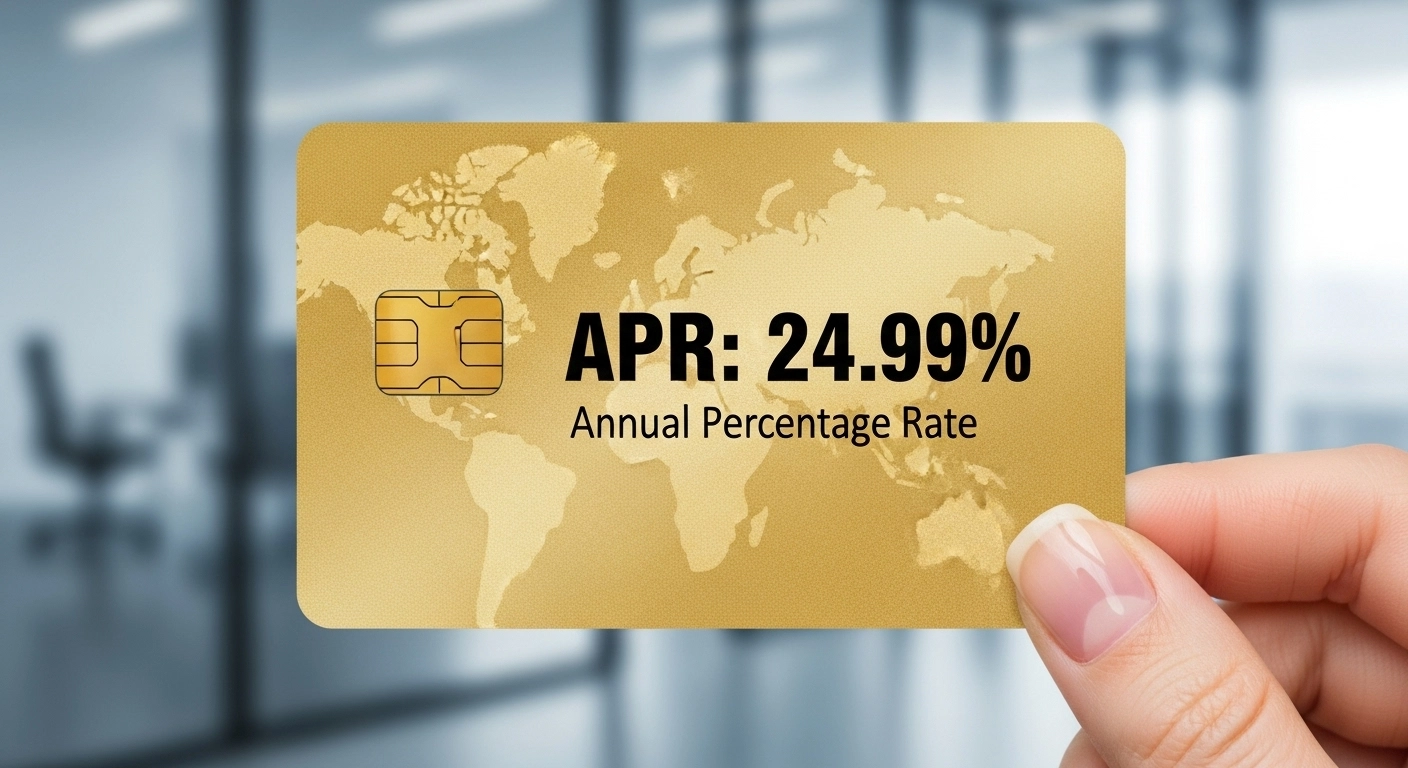
When exploring credit cards, you might have come across the term APR and wondered what it really means. This acronym is trending because many people are now more conscious about credit, loans, and personal finances.
Understanding APR on a credit card is essential for managing your debt, avoiding unnecessary interest charges, and making smart financial decisions.
APR, or Annual Percentage Rate, is the yearly interest rate a credit card charges on outstanding balances. In simple words, it tells you how much extra you’ll pay if you carry a balance on your card.
⚡ Quick Answer
APR on a credit card is the annual interest rate applied to any balance you don’t pay off in full each month.
It helps you understand the true cost of borrowing on your credit card.
📚 Understanding APR in Different Contexts
While APR is a financial term, it’s helpful to break down its meaning and context to avoid confusion.
1. In Credit Cards and Borrowing
- Definition: APR is the yearly rate charged for borrowing money.
- Why it matters: A lower APR means you pay less interest on balances. A higher APR can lead to more debt if balances aren’t paid off.
- Types of APR:
- Purchase APR: Interest on purchases.
- Cash Advance APR: Higher rate for withdrawing cash.
- Balance Transfer APR: Rate for moving balances from another card.
- Purchase APR: Interest on purchases.
Example: If your credit card has an APR of 18% and you carry a $1,000 balance for a year, you’ll pay roughly $180 in interest if no payments are made.
2. In Texting and Messaging
APR is rarely used in texting. If mentioned in finance-related chats, it usually refers to the interest rate on a card or loan.
Example:
- Friend: “I just got a new credit card with a low APR.”
- You: “Nice! That’ll save you money if you carry a balance.”
3. In Love and Relationships
APR doesn’t have a romantic meaning. If mentioned in a relationship context, it’s likely a joke about finances or budgeting with a partner.
Example:
- “I love you, but your spending habits are killing my APR!” (funny finance joke)
4. In Slang and Casual Language
APR is primarily a financial term and isn’t widely used as slang. In casual conversations, it generally refers to interest rates or borrowing costs.
5. On Social Media Platforms (TikTok, Instagram, Snapchat)
- Social media content often explains APR in a simple way for younger audiences, such as:
- “Your APR can make a $500 credit card debt cost way more than you think!”
- “Your APR can make a $500 credit card debt cost way more than you think!”
- Creators might use infographics or short videos to teach followers about managing credit wisely.
6. Spiritual or Symbolic Meaning
APR has no spiritual or symbolic meaning. Its context is strictly financial.
7. Numerology or Cultural Meaning
APR does not carry numerology or cultural significance. It is purely a practical, monetary term.
🧠 Examples & Usage
Example 1:
- You have a $2,000 credit card balance with a 20% APR. Paying only $100/month increases the total interest you pay over time.
Example 2 (Texting):
- “I’m thinking of transferring my balance to a card with 0% APR for 12 months.”
Context changes meaning:
- In finance: APR = interest rate.
- In casual conversation: may indicate awareness of financial responsibility or credit management.
❓ Common Questions About APR
Q1: What does APR really mean?
A: APR is the annual interest rate charged on any unpaid credit card balance.
Q2: Is APR positive or negative?
A: APR itself is neutral—it’s a rate. High APRs can be financially harmful if balances aren’t paid, but low APRs are beneficial.
Q3: Is APR romantic?
A: No, it’s strictly a financial term.
Q4: How should someone reply if APR comes up in conversation?
A: Acknowledge the context—either financial advice, budgeting tips, or personal finance awareness.
🏁 Conclusion
APR on a credit card is the annual interest rate charged on unpaid balances. Understanding it helps you make informed decisions, avoid extra charges, and manage your money wisely.
By knowing your APR, you’re better prepared to handle credit responsibly.
