
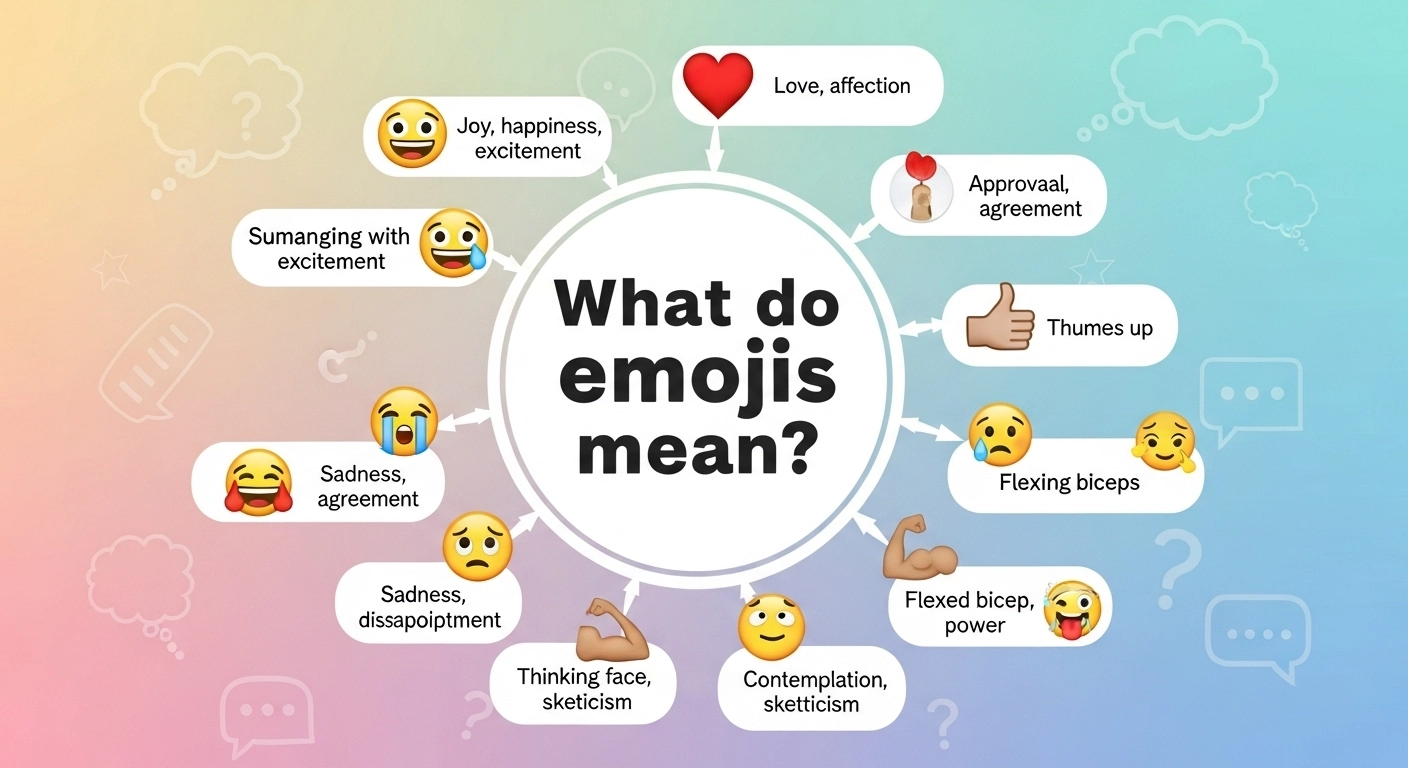
Emojis have become a universal language in the digital world. From text messages to social media posts, people use emojis every day to express emotions, reactions, and ideas quickly. But with hundreds of emojis available, many people are unsure about their true meanings.
This is why searching for “what do emojis mean” has become increasingly popular in 2026. Understanding emojis helps you communicate more effectively and avoid misunderstandings in both casual chats and professional messages.
In simple terms, emojis are small digital icons or symbols used to express emotions, objects, ideas, or actions visually in messaging and social media.
⚡ Quick Answer
Emojis are visual symbols used in digital communication to convey emotions, ideas, or reactions.
Their meaning can vary depending on context, culture, and the relationship between people using them.
📚 What Do Emojis Mean in Different Contexts?
In Texting and Messaging
Emojis make text conversations more expressive and fun. For example:
- 😊 = Happiness or friendliness
- 😢 = Sadness or disappointment
- 👍 = Approval or agreement
- 🔥 = Something impressive or exciting
Pro tip: Always consider the context. A wink 😉 can be playful or flirtatious depending on the conversation.
In Love and Relationships
Emojis are often used to express romantic feelings or attraction. Some common examples include:
- ❤️ = Love or deep affection
- 💕 = Flirty or romantic feelings
- 😘 = Sending a kiss
- 🥰 = Feeling loved or affectionate
In relationships, emojis can strengthen emotional connection but misinterpretation can happen, so context is key.
In Slang and Casual Language
In casual chats, emojis often represent popular slang or cultural references:
- 😂 = Laughing out loud or “that’s funny”
- 🙃 = Sarcasm or joking
- 🤌 = Italian-style emphasis or “perfect” in playful slang
- 🫡 = Respect, acknowledgment, or “got it”
These symbols have become part of everyday digital slang, especially among younger generations.
On Social Media Platforms
Platforms like TikTok, Instagram, and Snapchat use emojis as a visual language to increase engagement and convey tone:
- 🔥 = Trendy or popular content
- 💯 = Agreement or authenticity
- 🫶 = Love or support
- 🎉 = Celebration or achievement
Content creators also use emojis to make captions catchy and attention-grabbing.
Spiritual or Symbolic Meaning
Some emojis carry spiritual or symbolic significance. Examples include:
- ✨ = Magic, positivity, or spiritual energy
- 🕉️ = Hindu spiritual symbol
- ☯️ = Yin and Yang, balance
- 🕊️ = Peace and hope
These emojis can be used in digital messages to convey deeper philosophical or emotional meanings.
Numerology or Cultural Meaning
Certain emojis carry cultural or numerological associations:
- 🍀 (four-leaf clover) = Luck and prosperity
- 🐍 (snake) = Wisdom, danger, or transformation in different cultures
- 🏮 (red lantern) = Good fortune in Asian cultures
- 🏆 (trophy) = Achievement or success
Understanding these meanings ensures that you use emojis appropriately in diverse cultural settings.
🧠 Examples & Usage
Here are real-life examples of how emojis are used:
- Casual text:
“Can’t wait to see you tonight 😘❤️” → Romantic context - Friend chat:
“That movie was hilarious 😂😂😂” → Fun and laughter - Social media caption:
“Finally finished my project! 🎉💯🔥” → Celebration and pride - Professional or neutral:
“Got it, thanks! 👍” → Simple acknowledgment
Tip: The same emoji can have different meanings depending on tone, audience, or platform.
❓ Common Questions About Emojis
1. What does an emoji really mean?
It depends on the symbol, context, and relationship between the sender and receiver. Always consider how it might be interpreted.
2. Is an emoji positive or negative?
Most emojis are neutral but their tone can shift based on context. For example, 😏 can be flirty, sarcastic, or mischievous.
3. Are emojis romantic?
Some are! ❤️, 😘, 🥰, and 💕 are commonly used in romantic messages, but context matters.
4. How should someone reply to an emoji?
Reply based on the emotion or tone it conveys. A 😂 usually calls for a laugh or acknowledgment, while a ❤️ might need a similar affectionate response.
🏁 Conclusion
Emojis are more than just cute symbols; they are a powerful tool to express feelings, reactions, and ideas in the digital world. By understanding their meanings in texting, relationships, slang, social media, and cultural contexts, you can communicate more effectively and avoid misunderstandings.
Now that you know what emojis mean, you can use them confidently to enhance your digital conversations.
