
What Does “Simulator” Really Mean in 2025?
In a world defined by technology and digital immersion, “Simulator” has evolved from a niche technical term into a cornerstone of modern innovation. Whether it’s the Microsoft Flight Simulator used for aviation training or the NFL Mock Draft Simulator used by football enthusiasts, the word carries diverse implications across domains.
At its core, a simulator is a system or software that mimics real-world conditions—allowing people to learn, predict, and experiment safely. From psychological behavior modeling to virtual farming in Farming Simulator 25, simulators act as mirrors of reality, reshaping how we understand the world.
📦 Quick Definition Box: Simulator Meaning (Simple & Scientific)
| Term | Definition (2025) |
|---|---|
| Simulator | A computational or mechanical system designed to replicate real-world processes, environments, or behaviors for training, experimentation, or entertainment. |
🧠 In Short:
A simulator “creates a version of reality” — allowing you to experience, test, or learn without real-world consequences.
📊 Expanded Meaning Table: Contextual Dimensions of “Simulator”
| Field / Domain | Simulator Meaning | Example / Application |
|---|---|---|
| Technology | Software replicating physical or digital systems. | Microsoft Flight Simulator, American Truck Simulator |
| Education | Learning tools to practice real scenarios safely. | Medical training simulators, VR classrooms |
| Psychology | Cognitive models that simulate thought and emotion. | Behavior simulators, emotional response AI |
| Engineering | Virtual testing of systems before physical deployment. | Mechanical design simulators, digital twins |
| Gaming | Entertainment recreating real-life experiences. | Farming Simulator 22, Goat Simulator |
| Sports | Drafting or strategy replication for analytical insights. | NFL Mock Draft Simulator, Draft Simulator 2025 |
| Science | Experimental environments for hypothesis testing. | Climate simulators, quantum behavior models |
🕰️ The Origin and Evolution of Simulators
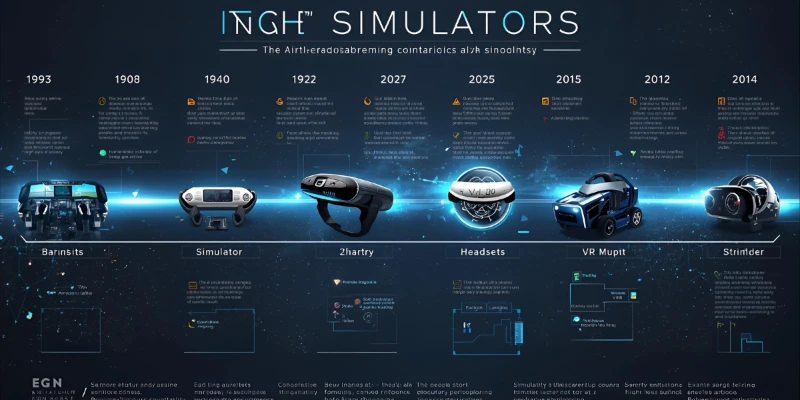
The concept of “simulation” has deep roots in science and philosophy. It began with mechanical models in the 1940s, evolved through NASA’s space training simulators in the 1960s, and now flourishes as AI-powered virtual worlds.
Evolution Highlights:
- 1940s–1960s: Early flight and control system simulators for pilots and engineers.
- 1980s–2000s: Rise of digital simulation in education and gaming.
- 2010–2025: Integration of AI, VR, and quantum computation — transforming simulators into predictive ecosystems.
🎮 Modern Applications: From Labs to Living Rooms
Today, the term “Simulator” bridges the scientific and the everyday. Here’s how:
1. Aviation & Engineering:
The Microsoft Flight Simulator remains the gold standard. It combines real-world physics, atmospheric models, and AI pilots to replicate flight conditions. Pilots train, hobbyists explore, and engineers test control systems — all within a virtual sky.
2. Sports Analytics:
Tools like the NFL Mock Draft Simulator and NFL Draft Simulator 2025 allow analysts, fans, and coaches to predict player selections and team performance. These simulations rely on statistical data, machine learning, and predictive modeling — merging sport and science.
3. Agriculture & Environment:
Games like Farming Simulator 22 and Farming Simulator 25 offer more than just play; they teach sustainable farming methods, crop rotation, and equipment operation. These simulators are now used in agricultural training programs globally.
4. Transportation & Logistics:
The American Truck Simulator isn’t just a game — it helps transport companies train drivers on routes, weather conditions, and time management.
5. Healthcare & Education:
Medical and psychological simulators replicate patient conditions for student doctors, allowing them to practice without risk. Educational institutions use VR-based classroom simulators to train teachers for real-world interactions.
🧠 Psychological Meaning of Simulators
Beyond machinery and software, simulators have deep psychological implications.
In cognitive science, a simulator is a mental model—our brain’s ability to imagine scenarios before acting. When you “rehearse” a speech in your head or visualize a game plan, you’re essentially running a mental simulation.
Key Psychological Uses:
- Behavior Simulation: Testing responses to hypothetical scenarios.
- Therapeutic Simulation: Exposure therapy using VR environments.
- Social Simulation: Modeling group behavior in sociology and AI ethics.
🧩 Insight: Simulators aren’t just tools; they reflect how humans naturally learn—by imitation, prediction, and feedback.
💡 Technical Foundation: How Simulators Work
Every simulator operates on three key principles:
| Principle | Explanation | Example |
|---|---|---|
| Modeling | Defining how real-world systems behave mathematically or logically. | Aircraft aerodynamics in flight simulators |
| Interaction | Allowing users to input actions that alter system outcomes. | Driver steering in American Truck Simulator |
| Feedback Loop | Providing real-time consequences for user input. | Environmental response in Farming Simulator 25 |
Simulators use AI algorithms, data modeling, and sensor feedback to mirror reality as closely as possible — sometimes even surpassing it.
🧩 Real-World Simulator Examples (2025)
| Category | Popular Simulator | Primary Use |
|---|---|---|
| Aviation | Microsoft Flight Simulator | Pilot training & entertainment |
| Sports | NFL Mock Draft Simulator | Predictive draft modeling |
| Agriculture | Farming Simulator 25 | Agricultural education & gaming |
| Transportation | American Truck Simulator | Logistics & route learning |
| Science | Quantum Process Simulator | Particle behavior analysis |
| Retail | TCG Card Shop Simulator | Inventory and trade simulation |
| Education | Virtual Classroom Simulator | Teacher training |
| Entertainment | Yandere Simulator, Goat Simulator | Psychological storytelling & parody |
🧬 Simulation in Science and Research
In modern research, simulators are used to test theories that are too dangerous, expensive, or abstract to experiment with physically.
For instance:
- Climate simulators predict global warming patterns.
- Quantum simulators explore particle interactions.
- Medical simulators enable the testing of drugs in virtual human models.
These tools accelerate scientific discovery and ensure safer, ethical experimentation.
🧭 Cultural Impact of Simulators
Simulators influence how we perceive reality itself.
In a culture shaped by virtual experiences, simulators blur the boundary between authentic and artificial.
From Yandere Simulator’s dark narrative exploration of obsession to Goat Simulator’s satire of realism, simulators are modern storytelling devices — reflecting our humor, fears, and creativity.
💬 Cultural Note:
In 2025, hashtags like #FlightSimCommunity and #NFLSimulatorDraft have millions of mentions, showing how simulation has become both a hobby and a profession.
🚫 Common Misconceptions About Simulators
| Myth | Reality |
|---|---|
| “Simulators are just games.” | Many simulators are used for serious professional training. |
| “Simulations aren’t accurate.” | Advanced simulators integrate real-world data and physics engines. |
| “Only tech experts use simulators.” | Modern simulators are accessible to students, gamers, and professionals alike. |
💡 Pro Tip: The more realistic the data and user feedback, the more valuable the simulation becomes.
🔁 Similar Concepts and Related Terms
| Term | Definition | Relation to Simulator |
|---|---|---|
| Emulator | Software mimicking hardware systems. | Focuses on compatibility, not learning. |
| Virtual Reality (VR) | Immersive digital environment. | Often powered by simulation engines. |
| Digital Twin | Real-time virtual model of a physical object. | Used in industry and engineering. |
| Game Engine | Software platform for building games. | Basis for simulation interactivity. |
| Predictive Model | Statistical representation for forecasting. | Core principle behind simulators. |
Read more⚖️ Legal Advice Basics: A Complete Guide for Beginners
A simulator replicates real-world conditions for learning, analysis, or entertainment.
No, simulators are widely used in aviation, medicine, engineering, and science.
A simulator imitates real processes; an emulator reproduces hardware functions.
Read more🏷️ WYO Meaning — The 2025 Slang Everyone’s Talking About
🧩 Final Thoughts: The Power of Simulation in 2025
Simulators have transcended their origins.
They no longer just imitate reality — they help us understand, design, and improve it.
Whether you’re a pilot training in a flight simulator, a student practicing surgery, or a gamer enjoying Goat Simulator, you’re participating in one of humanity’s most profound inventions — the art of simulation.
🧠 In 2025, simulators aren’t just tools — they’re teachers, innovators, and mirrors of the human imagination.
🧾 Author Bio
Written by: Mush
Digital culture & simulation systems analyst, exploring how technology reshapes learning, play, and perception.
