
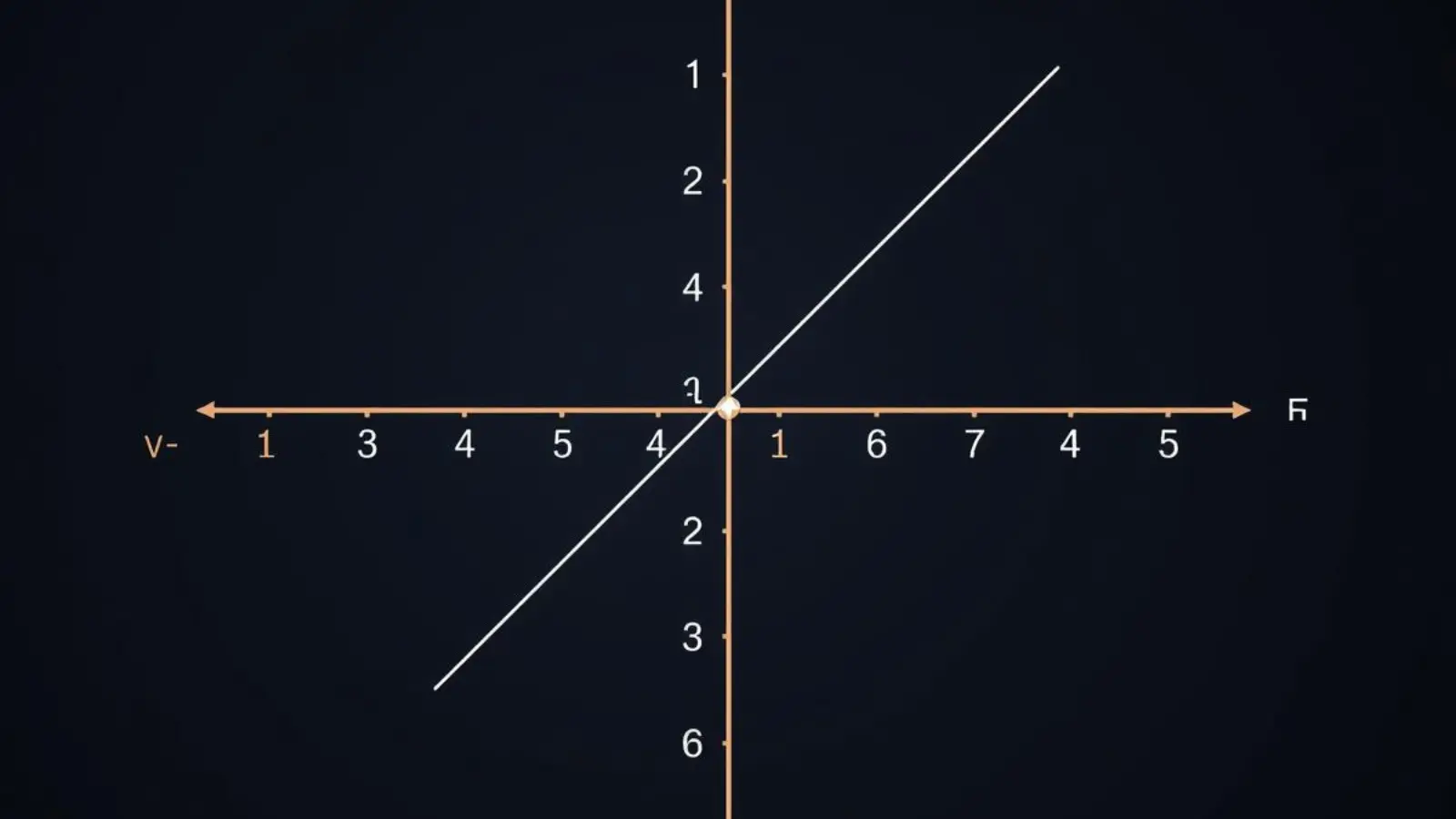
The Mean Value Theorem (MVT) is a fundamental concept in calculus that many students and enthusiasts search for when trying to understand the behavior of functions.
It is trending because it forms the basis for advanced mathematics, physics, and engineering problems. People often look up “Mean Value Theorem” to understand its practical applications in real life, from analyzing speed to predicting trends.
In simple terms, the Mean Value Theorem states that for a continuous and differentiable function, there exists at least one point where the instantaneous rate of change (the derivative) equals the average rate of change over a given interval.
⚡ Quick Answer
The Mean Value Theorem means that at some point on a smooth curve, the slope of the tangent line equals the slope of the line connecting the endpoints of the curve.
📚 Core Content Sections
Meaning in Texting and Messaging
In texting, the Mean Value Theorem is rarely mentioned directly. However, if someone references it, they usually mean finding a middle point or balance—like understanding the “average” outcome in a situation. For example:
- “Think of it like the MVT: there’s a point where things balance out.”
In Love and Relationships
In relationships, the Mean Value Theorem can metaphorically describe moments where feelings or actions match the overall trajectory of a relationship. For instance, if you and your partner have ups and downs, there may be a moment where the effort perfectly aligns with the relationship’s “average energy.”
In Slang and Casual Language
Although MVT isn’t common slang, people may use it humorously in discussions about balance or fairness. For example:
- “Bro, at some point you’ll have to pay your share—that’s MVT in action.”
On Social Media Platforms (TikTok, Instagram, Snapchat, etc.)
On platforms like TikTok or Instagram, the Mean Value Theorem may appear in educational content or memes. Creators often simplify it for entertainment, using graphs, animations, or relatable life examples like speed vs. time during road trips.
Spiritual or Symbolic Meaning
Symbolically, the Mean Value Theorem can represent balance, equality, and the idea that there is a perfect moment for every action. Some interpret it as a reminder that in life, a middle ground exists between extremes.
Numerology or Cultural Meaning
Mathematically, the MVT doesn’t have a numerological meaning. However, culturally, it can be linked to balance and fairness, representing the idea that “everything averages out” over time.
🧠 Examples & Usage
Real-Life Example 1: Driving
If you drive 60 miles in 2 hours, your average speed is 30 mph. The Mean Value Theorem guarantees that at some point, your actual speedometer reading was exactly 30 mph.
Real-Life Example 2: Stock Market
If a stock price rises from $100 to $120 over a week, the MVT implies that at some moment during the week, the instantaneous rate of increase matched the average weekly increase.
Example in Text
- “If I studied 10 hours in 2 days, there must be a point where I was studying exactly 5 hours per day. That’s MVT!”
Context Changes the Meaning
- Math context: Exact slope equality.
- Casual context: Finding balance or the “middle point.”
- Relationship context: Moments of alignment or fairness.
❓ Common Questions (FAQ)
1. What does the Mean Value Theorem really mean?
It means there is at least one point on a curve where the instantaneous slope equals the average slope between two points.
2. Is the Mean Value Theorem positive or negative?
It is neutral; it is a mathematical tool, neither positive nor negative.
3. Is the Mean Value Theorem romantic?
Not literally. In relationships, it is used metaphorically to describe balance or alignment.
4. How should someone reply if you mention the Mean Value Theorem?
Keep it simple:
- “Oh, you mean the point where the slope matches the average?”
🏁 Conclusion
The Mean Value Theorem is more than a calculus concept—it’s a principle of balance and predictability.
From mathematics to real-life scenarios, it helps us understand how averages and instantaneous moments relate.
Now, when you hear about the Mean Value Theorem, you know it guarantees that there’s always a point where the specific matches the overall trend.
