
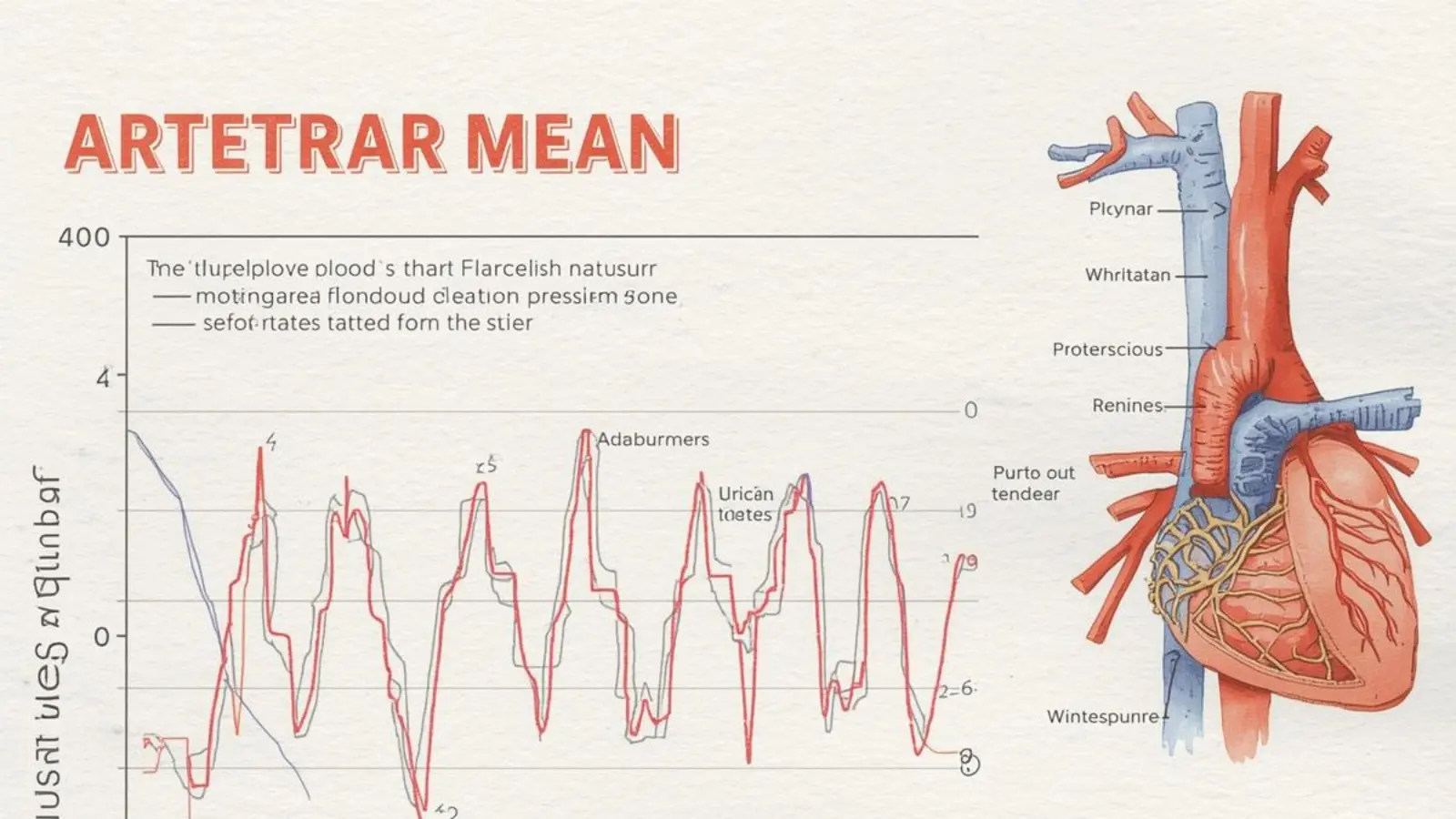
In recent years, mean arterial pressure (MAP) has become a term people frequently search online, especially as awareness of heart health and blood pressure monitoring grows. Whether you’re checking your vitals at a doctor’s office or learning about cardiovascular health, understanding mean arterial pressure is essential. But what exactly does it mean, and why is it important?
Mean arterial pressure (MAP) is the average pressure in your arteries during one cardiac cycle, giving an overall picture of blood flow and how well your organs are being supplied with oxygen. Unlike regular blood pressure readings, MAP provides a more precise insight into organ perfusion, making it a critical metric for doctors and patients alike.
⚡ Quick Answer
Mean arterial pressure (MAP) is the average pressure in the arteries throughout a heartbeat, reflecting how effectively blood circulates to organs. Maintaining a healthy MAP is vital for overall cardiovascular health.
📚 Understanding Mean Arterial Pressure in Different Contexts
In Medicine and Health
In the medical world, mean arterial pressure is primarily used to evaluate organ perfusion—how well blood reaches your organs. A normal MAP is generally considered 70–100 mmHg, which ensures that organs like the brain, heart, and kidneys receive enough oxygenated blood.
Doctors calculate MAP using the formula:
MAP=(2×Diastolic)+Systolic3MAP = \frac{(2 \times Diastolic) + Systolic}{3}MAP=3(2×Diastolic)+Systolic
- Systolic pressure: Pressure when the heart beats
- Diastolic pressure: Pressure when the heart rests
A MAP below 60 mmHg may indicate poor blood flow, while a consistently high MAP can signal hypertension or heart disease.
In Texting and Messaging
Unlike medical contexts, MAP is rarely used in casual texting. If someone mentions “MAP” in a message, it’s almost always referring to the medical term—for example:
“My MAP is low today, feeling dizzy.”
It’s not commonly used as slang, so context matters.
In Love and Relationships
In relationships, mean arterial pressure doesn’t have a romantic meaning. However, someone might jokingly reference it when discussing stress or health concerns:
“You make my MAP rise every time we argue 😅”
Here, it’s more metaphorical, showing how emotions can affect blood pressure.
In Slang and Casual Language
Currently, MAP does not have a slang meaning in common language. It’s mostly confined to healthcare discussions, fitness communities, and medical forums.
On Social Media Platforms
On platforms like TikTok, Instagram, or Snapchat, MAP usually appears in:
- Health tips videos
- Fitness check-ins
- Medical explainer posts
Example captions:
“Check your MAP regularly—it’s more than just BP!”
“MAP 95 mmHg ✅ Feeling healthy today!”
Here, it’s used to raise awareness about heart health rather than as casual slang.
Spiritual or Symbolic Meaning
Mean arterial pressure has no spiritual or symbolic meaning. Its significance is purely medical, focusing on blood flow and cardiovascular health.
Numerology or Cultural Meaning
There’s no numerology or cultural interpretation associated with MAP. It is strictly a medical measurement.
🧠 Examples & Usage
Here are some real-life examples of MAP in sentences:
- Medical context:
“The patient’s MAP dropped to 55 mmHg, indicating insufficient organ perfusion.”
- Fitness context:
“After the morning run, my MAP was slightly higher than usual—time to hydrate.”
- Casual/metaphorical usage:
“This exam is making my MAP skyrocket! 😅”
Context matters—in medicine, it’s clinical, while in casual conversation, it can be playful or metaphorical.
❓ Common Questions About Mean Arterial Pressure
Q1: What does mean arterial pressure really mean?
A: It’s the average pressure in your arteries during a heartbeat, reflecting how well blood flows to your organs.
Q2: Is MAP positive or negative?
A: MAP itself is neither positive nor negative. A healthy MAP indicates good organ perfusion; an abnormal MAP signals potential health issues.
Q3: Is MAP romantic?
A: No. MAP is strictly a medical term, though people may use it metaphorically in playful or emotional contexts.
Q4: How should someone reply if I mention my MAP?
A: Typically, responses are concerned or informative, e.g., “Make sure to rest and hydrate” or “That’s within the normal range.”
🏁 Conclusion
Mean arterial pressure (MAP) is a vital health metric that tells you how well your blood circulates throughout your body. It’s an essential number for understanding cardiovascular health, especially for patients with heart or kidney conditions. While MAP isn’t used in slang or romantic contexts, it’s a term that everyone should know when learning about blood pressure and organ perfusion.
By now, you should have a clear understanding of MAP, why it matters, and how it’s used in different situations. Staying informed about your MAP can help you take better care of your heart and overall health.
